
Ընթերցիր Թումանյանի ինքնակենսագրությունը և կենսագրական մանրամասները, ստեղծագործության բնութագրերը և ստեղծիր վիկտորինա՝ https://kahoot.com ծրագրով (15-20 հարց)։
Թումանյան
Лента блога
Փետրվարի 7
Թումանյանի ասույթները
Ոչ մի պաշտոն կամ կոչում չկա, որ հավասար լինի և կարելի լինի համեմատել մարդ կոչումի հետ:
Ըստ քեզ՝ ինչ հատկություններ պիտի ունենա մարդ կոչմանը համապատասխանող մարդը։
Լեզուն է ամեն մի ժողովրդի ազգային գոյության ու էության ամենախոշոր փաստը, ինքնուրույնության ու հանճարի ամենախոշոր դրոշմը…
Համամի՞տ եք, ինչու է այդպես։
Աշխարհքում ամեն բանի բույրը ճաշակն է։
Ասում են նաև՝ ճաշակն ընկեր չունի, ի՞նչ նկատի ունի Թումանյանը՝ ըստ քեզ։
.. Ծաղիկը դրված է մեջտեղը և նույն ծաղկից մեղուն մեղր է շինում, օձը՝ թույն:
Մեկնաբանի’ր։
Մարդը պետք է լինի ազնիվ, լեզուն ազգի ինքնությունն է, ճաշակը յուրահատուկ է, ծաղկից մեղուն մեղր է ստանում, օձը՝ թույն։
03.02-07.02.2025թ․
Unit 15.


- Underline the correct word or phrase.
a) New research shows some young people can’t help eating food which contains large amounts of sugar, salt, and animal fat.
b) Many young people also avoid taking any exercise.
c) They don’t even enjoy walking to school or playing active games with their friends.
d) For too many young people, enjoyment involves sitting in front of the television, or in front of a computer playing games.
e) Of course, if they keep doing this, they are very likely to have health problems at an early age.
f) Health experts suggest taking hard exercise at least three times a week.
g) This means running, cycling, or swimming.
h) So even if you don’t feel like taking exercise, it’s important to organize regular exercise activities.
i) You could go swimming or jogging, for example.
j) You may also consider changing your diet and eating more fruit and fresh vegetables. - Complete each sentence a to h with an ending from 1 to 8.
a) For a Roman soldier, joining the Roman army meant 6 remaining in service from 20 to 30 years.
b) He received wages but had to spend money too, since being in the army involved 2 buying his own food, uniform, and weapons.
c) In the early days of Rome, everyone became a soldier, and young men couldn’t avoid 8 serving in the army if there was a war, as it was compulsory.
d) However, as time went on, fewer Romans served as soldiers. The army stopped 4 taking all the young Roman men, and service became voluntary.
e) When the army was at the height of its power, an enemy who considered 3 attacking it faced very serious problems.
f) Unless the enemy had very large numbers of soldiers or attacked by surprise, they risked 1 being completely destroyed by the ancient world’s best fighting force.
g) Foreign armies were often disorganized and ran away, but the Romans always kept 5 fighting until the end if necessary, and rarely surrendered.
h) The Romans were more successful because their soldiers spent more time 7 training to use their weapons and fighting in organized groups. - Complete the text with the -ing or to-infinitive form of the verbs in brackets.
People who remember to do everything they have planned are usually people who organize their tasks in some way and avoid getting into a muddle. A shopping list is a good example of this technique, provided you remember to take the list with you when you go shopping.
It’s sometimes possible to remember a fact, for example, if first of all you stop to think for a few moments. When you try to remember something, this will be easier if you have learnt it in an organized way. If you are not sure how to do this, try writing brief notes about the text you are reading. Many people find this an effective way of learning. After all, it’s easy to read something and not understand or remember it, usually because you have stopped paying attention.

4. Complete the text with a word from the list. You will have to use some words more than once.
As well as being a scientist, Galileo was interested IN painting and music. He started his studies BY attending medical school in Padua. Unlike most scientists at that time, who usually relied ON discussing the facts, not trying to prove them,he recognized the importance OF doing experiments to prove the facts. He is famous FOR dropping different
weights from the Tower of Pisa to prove that all bodies fall at the same rate, though this is probably not a true story. Through practice, he also became good AT observing the stars,and identified craters on the Moon, sunspots, and the moons of Jupiter. As a result OF studying the planet Venus, he succeeded IN proving that Copernieus was correct, and that the Earth moved around the Sun. Unfortunately, the Church authorities accused him OF publishing unacceptable ideas. In the end he was forced to choose between being punished by the Church, or denying his own ideas. He spent most of the last nine years of his life imprisoned in his own house.
5. Rewrite each sentence so that it contains the word in capitals.
a. Are you INTERESTED in fossil-collecting?
b. Does walking long distances INVOLVE in your daily routine?
c. I often KEEP finding rocks that aren’t really fossils.
d. When you look for fossils on a cliff, there is a RISK of falling.
e. I really think this is the wrong place to look for fossils, it won’t HELP you much.
f. Going on the club trip MEANS getting up early.
g. I REMEMBER leaving my hammer at home.
h. I FEEL like sitting down and having a rest!
i. I have the knowledge and skill to find fossils, I know how to do it.
j. Don’t take up a hobby unless it’s WORTH it and you’re serious about it.
Փետրվարի 5
Նախադասության գլխավոր անդամներ, ստորոգյալ։ Ընդգծել ենթակաները, դուրս գրել ստորոգյալները:
Վայրի վարազի պես էր անտառապահ Պանինը։ Մի հրեշ էր նա անտառապետի տարազով, կոկարդով գլխարկը գլխին։ Անտառում հանկարծ կերևար, փայտահատի կողքին կկանգներ, կնայեր, թե ինչպես նա արագ կացնահար է անում ծառը։ Մեկ էլ, թաքստոցից դուրս կգար, կմռնչար այնպես, որ արջերն էլ էին զարթնում քնից և որջերում մռռում։ Լեղապատառ փայտահատին մնում էր կամ փախչել, կամ օձի պես ծռմռատել Պանինի մտրակի հարվածների տակ։
Պանինը որսորդ էր։ Վեց շուն ուներ, մեկը մյուսից կատաղի։ Շները հետ որսի էր գնում Մթնաձորի խորքերը։ Ձմռան լուսնյակ գիշերներին, երբ վախից ոչ ոք չէր մոտենում Մթնաձորին, Պանինի շները անտառի բացատում արջի հետ էին կոխ կենում, կամ հալածում էին խրտնած պախրային։
Պանինը վազում էր շների հետևից, հրճվանքից ճչում։ Գիշերվա որսը էր նրա համար հարազատ տարերք։
Առավոտը բացվում էր, ձյունի վրա արյան շիթեր էին երևում, այստեղ-այնտեղ խառնիխուռն հետքեր, խեղդված գայլի դիակ, կոտրատած ճղներ։ Մի փչակի մոտ նստում էր Պանինը, մինչև շները որսի միսն ուտեն։
Նա սպանած և ոչ մի կենդանու ձեռք չէրտալիս և շներին կշտացնելուց հետո վերադառնումէր տուն։ Եթե ճանապարհին տեսներ մեկին գողացած փայտը շալակին, Պանինի շներըպիտիհարձակվեին նրա վրա, հալածեին, մինչև քափ-քրտինքի մեջ կորած, արյունլվա մարդըկարողանար մի տեղ պատսպարան գտնել։
Talking a bout a photo

- Look at the table and put the words in the correct order. Is anybody in the class wearing one of these items?
1. new Nike trainersa
2. patterned cotton shirt
3. fashionable skinny blue jeans
4. black high-heeled leather boots
5. a big striped woollen jumper - In pairs, take turns to describe clothes students in your class are wearing. Use at least two adjectives to describe each item. Guess who your partner is describing.
1. He is wearing grey trousers, a white long-sleeved T-shirt, and a black jacket.
2. He is wearing black street-style jeans, wide and distressed, a black T-shirt, and a sleeveless jacket.
3. He is wearing black wide jeans, an oversized black T-shirt, and a black jacket. - In pairs, take turns to describe clothes you have at home. Talk about something you wear:
Summer: T-shirts, shorts, and light sneakers.
Winter: Warm jackets, thick blouses, boots, and gloves.
Spring: Hoodies, jeans, and a light jacket.
Sport: Tracksuits, sneakers, and sports T-shirts.
Formal occasions: A suit, dress shoes, and a shirt. - Look at photo A. Describe the clothes the people are wearing.
The woman is wearing a red and white patterned sleeveless top and blue jeans.
The man in the background is wearing a red long-sleeved shirt and dark jeans. - How would you describe the situations in photos A and B? What’s similar and what’s different about them? Think of an adjective to describe how the woman and boy are feeling.
A
The woman looks bored or uninterested while sitting in a chair. The man is choosing clothes and seems focused or indecisive.
B
The two girls look excited and happy while trying on dresses. The boy sitting on the floor with shopping bags looks tired or bored. - Read the SPEAKING FOCUS and complete the description with one word in each gap. Then listen and check.
The photos both show people in clothes shops. In the first photo, a woman is waiting for someone to choose a shirt. Maybe he’s her boyfriend or her husband. She looks bored. In the second photo, its some people, maybe sisters or friends. We see a boy. He’s waiting too, but perhaps they’re his family. Both photos show people waiting, and they look very bored. The main difference between the photos is that the woman looks more comfortable than the boy. He has to sit on the floor! - In pairs, choose two photos and discuss the questions.
1 Compare the photos. How do you think the people are feeling?
2 Do you enjoy shopping for clothes? - In pairs, ask and answer the questions.
1 How often do you go shopping?
2 Who do you usually go with? Why?
3 What are your favourite or least favourite shops? Why?

Փետրվարի 3
Նախադասության գլխավոր անդամներ, ենթակա
1.Դուրս գրել ենթականները, որոշել՝ որ խոսքի մասով են արտահայտված: Վերականգնել զեղչված ենթակաները։
Լուսաբացի շողքը երդիկից ներս էր ընկել, կարպետի վրա կաթնագույն շրջան գծել, երբ Սաքանը զարթնեց, տրեխները հագավ:
Նա Ասյայի մոտով անցնելիս տեսավ սպիտակ շորը, վիզը, ուսի մի մասը, ուսի վրա սպիտակ շորի բարակ մի կտոր: Արագ մոտեցավ դռանը, մանգաղն առավ, դուրս եկավ:
Տան առաջ, առվի մոտ նա երեսը լվաց, սրբեց չուխի ծայրով, իջավ ձորը, այգում խոտ քաղելու: Ճանապարհին Սաքանը մի միտք էր անում՝ մե՞րկ էր քնել Ասյան, թե շապիկ կար հագին. եթե շապիկ կար, ինչո՞ւ ուսը բաց էր, գուցե կողքի սպիտակ շորը նրա շապի՞կն էր:
Կովը շուտ-շուտ գոմի դռանն էր նայում, հորթուկին լիզում, վիզը ախոռի փայտերին քսում, քերում: Տանն արդեն զարթնել էին, տեղաշորը հավաքել, կինը օջախն էր վառել, թեյի պատրաստություն էր տեսնում, երբ Սաքանը թարմ խոտի երկու խուրձ շալակին եկավ տուն:
Խոտի խուրձը կովի առաջ շաղ տալիս Ասյան էլ էր կանգնած Սաքանի կողքին: Նա ծիծաղում էր, երբ հորթը դունչը մեկնում էր կանաչ խոտին, հոտոտում և ոտքերը երերալով փախչում, գլուխը թաղում մոր կուրծի մեջ:
2.Կազմել նախադասություններ, որոնցում ենթակաները արտահայտված լինեն գոյականով, ածականով, թվականով, դերանունով, դերբայովներով։
գոյականով–երկինքը մուգ կապույտ էր երեկոյան:
ածականով–ազնիվը միշտ կհաղթի:
թվականով–յոթը մասնակցեց մրցույթին և հաղթեց:
դերանունով–նրանք վերադարձան տուն ուշ երեկոյան:
դերբայով–ուսումնասիրելը օգնում է զարգացնել միտքը:
16.12-19.12.2024թ․
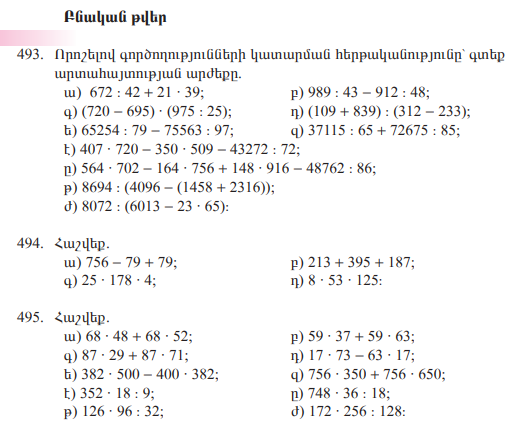
493.
ա. 835
բ. 4
գ. 975
դ. 12
ե. 47
զ. 1426
է. 114289
ը. 406945
թ. 27
ժ. 4036/2259
494.
ա. 756
բ. 795
գ. 17800
դ. 53000
495.
ա. 6800
բ. 63
գ. 8700
դ. 170
ե. 38200
զ. 756000
է. 704
ը. 1496
թ. 378
ժ. 344




Դեկտեմբերի 18
Պտտել անիվը և պատասխանել 10 հարցի։
1. Որն է կոչվում կապ,քանի տեսակ են լինում կապերն ըստ դիրքի:
Կապը կոչվում է բառերի կամ մասերի փոխհարաբերություն։ Դիրքի համաձայն լինում են հետևյալ տեսակները՝
2. Ստորադասական շաղկապներ: Դրանց կիրառությունը: Օրինակներ
Ստորադասական շաղկապները կապում են ստորադաս նախադասությունը գլխավորին: Օրինակներ որ, եթե, եթե:
3. Որն է կոչվում մակբայ:Մակբայների ինչ տեսակներ կան:
Գործողության հատկանիշ ցույց տվաղ բառերը կոչվում են մակբայներ։
Մակբայները լինում են տեղի, ձևի, չափ ու քանակի, ժամանակի։
4. Ստորադասական շաղկապներ: Դրանց կիրառությունը: Օրինակներայ: Մակբայների ինչ տեսակներ կան:
Պատճառի շաղկապներ Նպատակի շաղկապներ Պայմանի շաղկապներ Ժամանակի շաղկապներ Հետևանքի շաղկապներՀակադրության շաղկապներ
5. Ինչ գիտեք կապերի հոլովառության մասին:
Կապերի հոլովառությունը ցույց է տալիս բառի ձևերի փոփոխությունները նախադասության մեջ կապակցման կամ հոլովման միջոցով։
6. Ինչ է շաղկապը: Քանի տեսակ են լինում շաղկապները:
Շաղկապը խոսքի մաս է, որը կապում է բառերը կամ նախադասությունները։ Տեսակներ՝ համադասական, ստորադասական։
7. Ինչ առնչություններ ունեն կապերն ու շաղկապները:
Կապերը խոսքի կառուցվածքային հարաբերություններ են, իսկ շաղկապները այդ հարաբերությունները արտահայտող բառեր են։
8. Քանի տեսակ են լինում կապերն ըստ կազմության:
Պարզ, Բարդ, Կրկնակի, Բաղադրյալ, Հոդակապ, Շաղկապ, Նորամուտ, Տարաբաշխական, Վերջավորություն։
9. Որ վերաբերականներն են տրոհվում:
որ, որտեղ, երբ, որքան, ինչքան, ինչու
10. Ըստ կազմության քանի տեսակ շաղկապները: են լինում
Պարզ, Բարդ, Կրկնակի, Բաղադրյալ
Дополнительное задание
Делать из мухи слона-сильно преувеличивать что либо
Լուն ուղտ շինել-անհնարին բան անել
Держи карман шире-не рассчитывай что либо получить
Գրպանը լայն բաց արա-Մի սպասիր, որ ինչ-որ բան կստանաս
Гроша ломаного не стоит-не имеет никакой ценности
Մի մատնոց թան չարժե-Չի ունեցել ոչ մի արժեք
Рыба гниет с головы-главные проблемы начинаются с верхушки
Ձուկը գլխից է հոտում-Լուրջ խնդիրները սկսվում են վերևից
Между Сциллой и Харибдой-когда опасность угрожает с двух сторон
Սցիլլայի եւ Խարիբդայի արանքում-Երբ վտանգը սպառնում է երկու կողմից
 Ռոբերտ Մխիթարյան